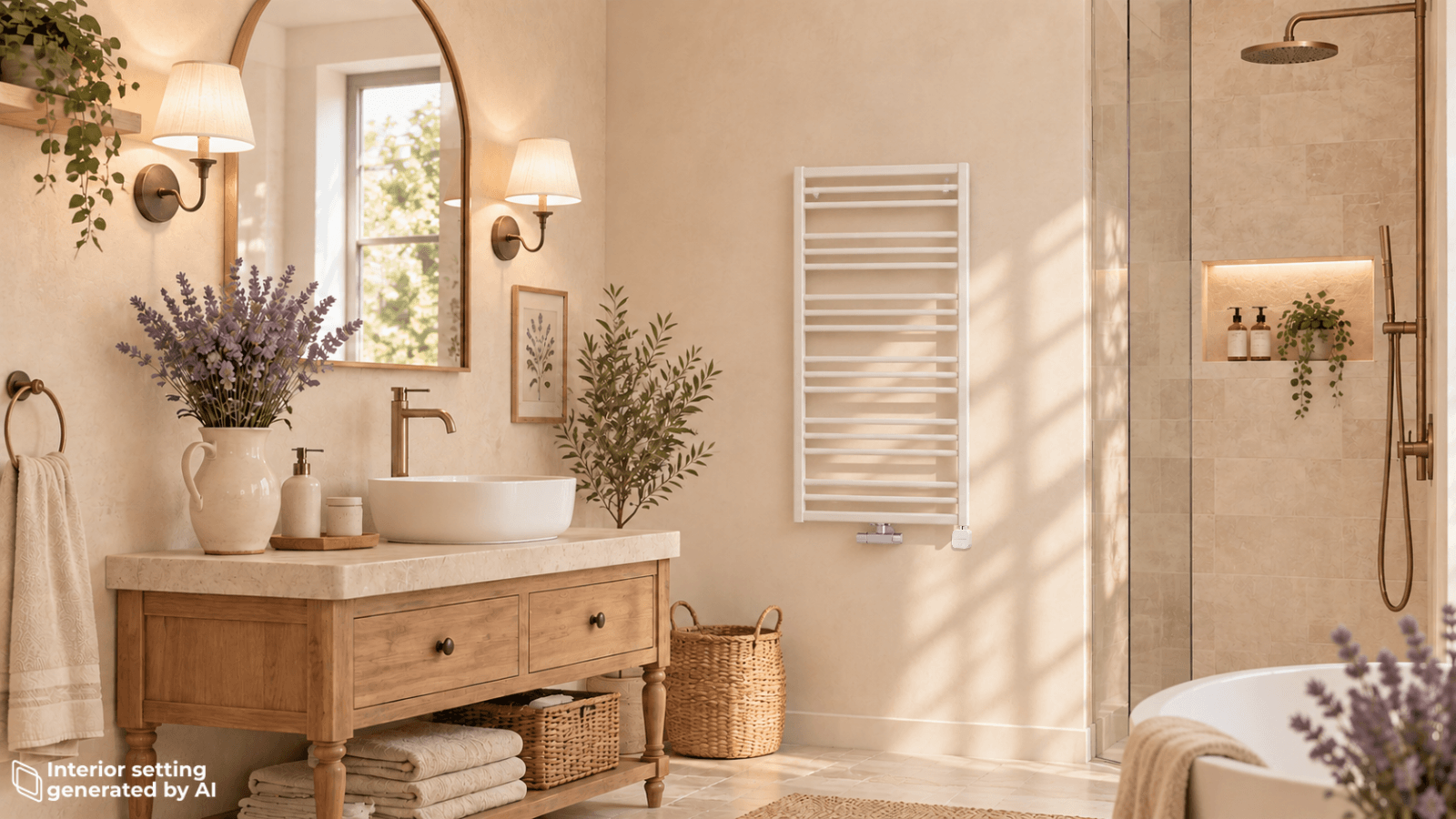
Provençal style invites you into a world where natural beauty meets effortless elegance and everyday life seems to move at a gentler pace. Its inspiration comes from the picturesque landscapes of south-eastern France: vast lavender fields, stone houses, olive groves and sunshine that bathes everything in warm, golden hues. It is no wonder that interiors designed in this style radiate tranquillity, warmth and natural charm. A Provençal bathroom does not have to resemble a museum filled with antique objects. It can combine rustic touches with modern fittings while retaining its distinctive character. Light colours, natural textures and subtle references to French tradition can transform even a small space into a welcoming place to relax and unwind every day.
What defines a Provençal-style bathroom?
- Natural materials and rustic finishes: In Provençal interiors, authenticity and a connection with nature are what matter most. Stone, wood, terracotta, ceramics and wrought-iron details are all characteristic of this style. Walls look particularly beautiful with finishes inspired by lime plaster, natural stone or handcrafted ceramics. For the floor, consider tiles that imitate light-coloured stone, travertine or wood with clearly defined grain. Tiles in warm beige and sandstone shades also work beautifully, echoing the traditional architecture of Provence. It is not just the colour palette that matters. Textures, matt finishes, subtle irregularities and delicate tonal variations give the interior a more natural appearance. As a result, the bathroom gains a rustic feel without compromising the practicality expected of modern materials.
- Colours inspired by the landscapes of southern France: The Provençal colour palette is a direct reflection of the surrounding natural landscape. It is built around warm white, cream, ecru, sandy beige and light shades of grey. These colours brighten the interior and create a calm backdrop for the other design elements. Distinctive accents draw on the local scenery: lavender and soft lilac evoke blooming fields, olive and sage green bring to mind olive groves, while muted blue and warm terracotta recall the southern sky and traditional buildings. There is no need to use all these colours at once. A light base complemented by one or two carefully chosen accents is enough to create a harmonious interior that feels fresh and timeless.
- Furniture, lighting and accessories with French character: A Provençal bathroom should be not only beautiful but also welcoming and comfortable. Wooden cabinets with panelled or carved fronts, glass-fronted cupboards, chests of drawers with gently curved legs and furniture in white, cream or natural wood tones are all ideal choices. Ceramic handles, metal fittings and delicate decorative details add to their charm. Lighting also plays an important role. Classic wall sconces, lamps with light-coloured shades and wrought-iron-inspired fittings help create a warm, intimate atmosphere. Complete the look with linen textiles, wicker baskets, ceramic vessels and natural decorations. Fresh or dried lavender is a must, as it is one of the region’s most recognisable symbols. Olive branches and herbs in simple ceramic pots are also lovely additions. The key is to choose accessories that look natural rather than like a collection of random decorations. In a Provençal interior, the secret lies in simplicity, moderation and harmony.
How can you choose the right products? In a bathroom inspired by Provence, fittings that combine simple design with everyday practicality work particularly well. Natural materials, warm colours and rustic details create a distinctive look, so any additional elements should complement the interior without taking away its lightness. The rectangular-profile electric towel dryer and NEX heating element are a perfect fit for this kind of space. Their modern, minimalist design subtly complements classic furniture, stone surfaces and natural accessories without competing with the decorative elements.